Basement Builds

Basement Golf Simulator Installation.

The basement is the best room in the house for a simulator — and the trickiest to get right. Ceiling height, moisture, and ductwork are construction problems, and construction is what we do.

Most golf simulators in Kansas City end up in the basement, and for good reason: it's out of the way, the temperature is stable, and the space is usually there. But a basement golf simulator installation is where the construction details actually matter — the ceiling clearance for a driver, the humidity that concrete holds, the duct running right through the swing path. Get those right and the room works for years. Get them wrong and you're patching drywall after the first guest's "new swing thought." Goal, budget, design, build — that order is how we get them right.

  • Ceiling height assessed honestly before anything's ordered — including what's possible if yours is low
  • Moisture and climate handled, because a basement holds more humidity than the rooms above it
  • Built by a 30-year construction team that's solved basement problems for decades

30 years in KC construction · 5 bays we built ourselves · one team, accountable start to finish

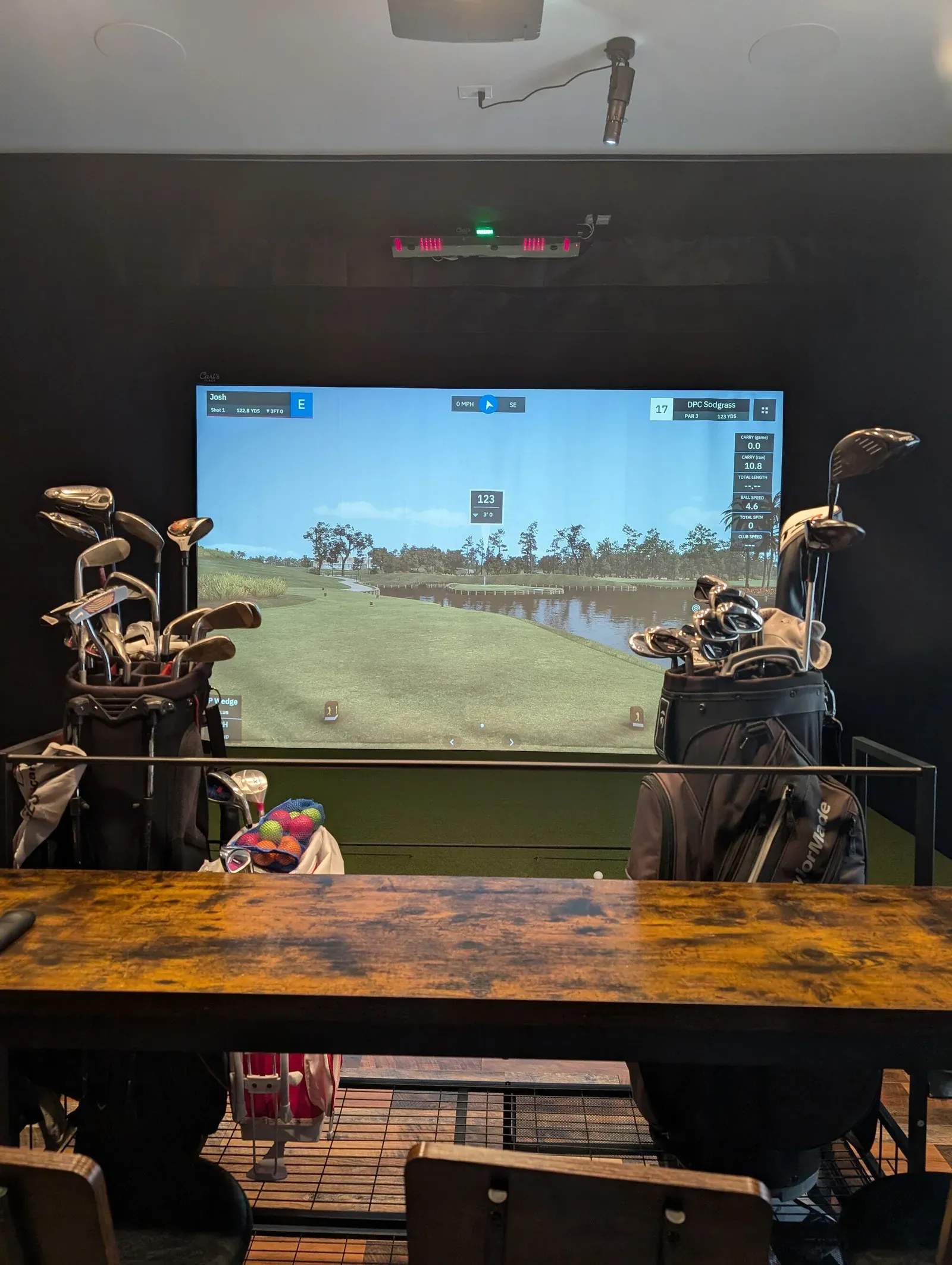
Finished home golf simulator bay with a course on screen, golf bags, and theater seating

Why Basement Builds Are Different

A simulator is easy. A basement is not.

Here's what gets people in trouble: the simulator equipment is the simple part. Order it, mount it, calibrate it — that's a known quantity. The basement is the variable. Is the ceiling tall enough for a driver, or just tall enough for a wedge? Where's the humidity going to come from, and what happens to the screen and electronics when it does? Is there a duct or a beam exactly where the screen needs to hang? A company that's an equipment installer first will work around those problems. A construction company solves them before they're problems.

The equipment isn't what makes a basement build hard. The basement is.

Equipment dropped into an unprepped basement

  • Ceiling height never honestly assessed — driver clips the screen or the ceiling
  • Moisture ignored until the screen sags and the electronics act up a year later
  • A duct or beam worked around badly, so the room always feels like a compromise

A basement built right

  • Ceiling clearance measured and planned for the swing you actually have
  • Humidity and climate handled as part of the build, so the room holds up year-round
  • The room designed around the ducts, beams, and egress — not in spite of them
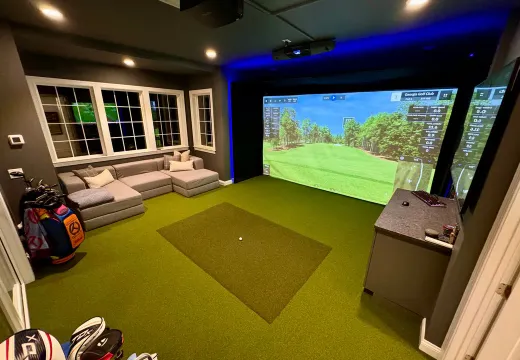
Clean finished home golf simulator room with sectional seating, turf, and accent lighting
A basement built for the swing — clearance, climate, and clean finish
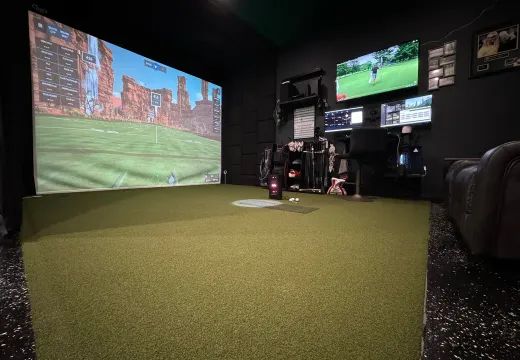
Cluttered home golf simulator room with a desert course on screen and gear along the walls
The compromise version — equipment forced into a space that wasn't prepped

When a basement build is done right, you stop thinking about all of it. The room is comfortable in February and August, the screen sits flat, the picture is square, and there's room to swing a driver without flinching. That's not the equipment doing that — that's the construction underneath it.

What's Included

What a basement build includes.

A basement build covers the same scope as any home installation — with the basement-specific realities handled as part of it. Here's what's included.

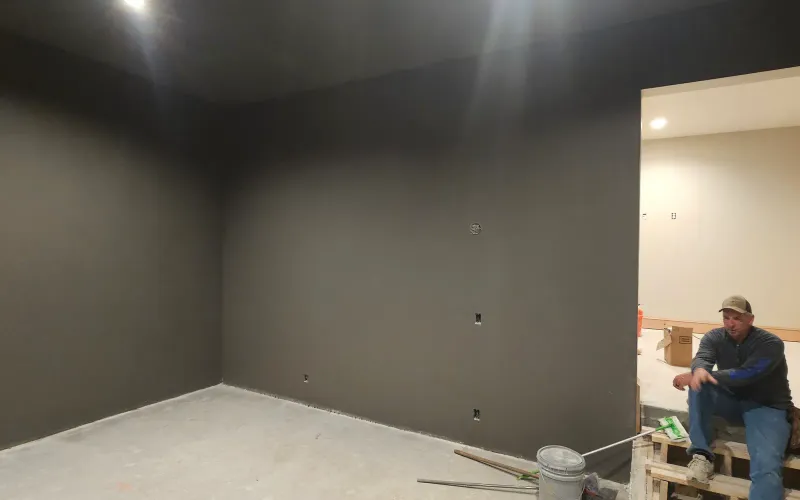
Empty basement prepped for a golf simulator with painted walls and roughed-in wiring
01

Space & ceiling assessment

We start with a site visit and a tape measure, because in a basement the ceiling is everything. We tell you honestly what your height allows — what swings work, what doesn't, and what your options are if it's tight. (More on height below.)

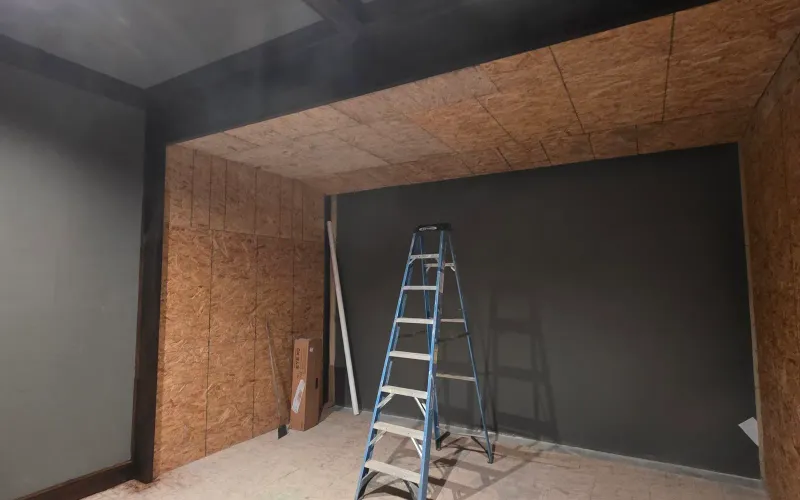
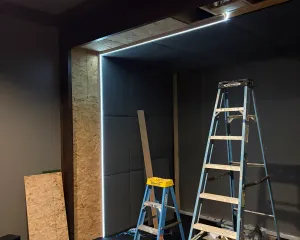
Golf simulator bay under construction with OSB-sheathed walls and ceiling
02

Equipment, chosen for you

We install every major brand — Uneekor, Trackman, ProTee VX, Apogee, Foresight, and Mevo+ for tighter budgets — and help you choose based on your goals, budget, and space, not on which brand spends the most on marketing. In a low basement, the equipment choice and the room design work together.

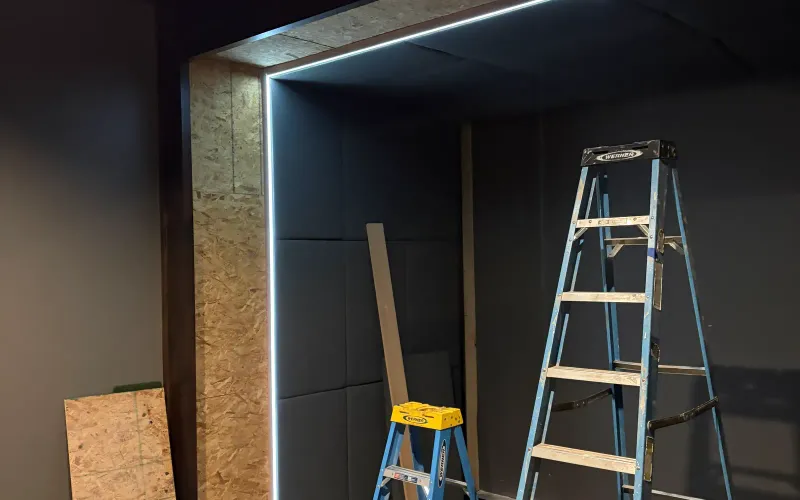
Golf simulator enclosure under professional installation with an LED-lit frame and acoustic panels
03

Climate, moisture & the build

The construction the basement needs — addressing humidity and comfort, working around ducts and beams, leveling and finishing — done by the crew that built our own five bays. This is the part that makes a basement room livable year-round.

See how the build runs
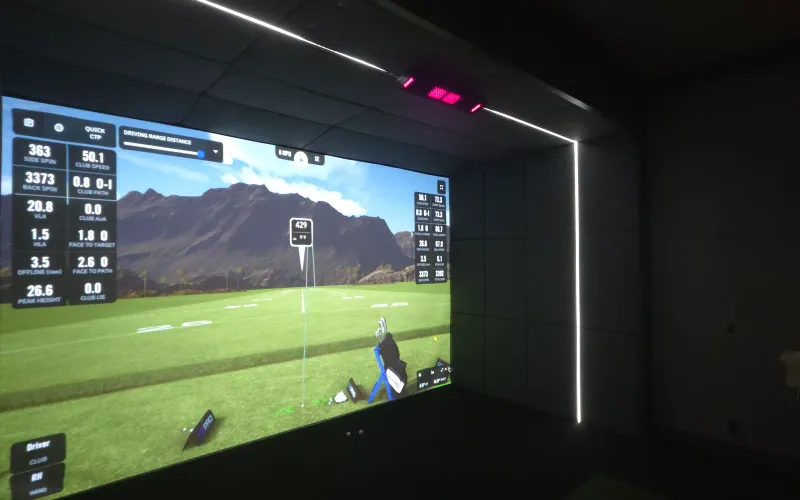
Calibrated golf simulator bay with a shot-data overlay and an overhead launch monitor
04

Installation & calibration

Enclosure, screen, projector or impact screen, mat and turf, mounting, and clean cable runs — then calibrated until the numbers are true and the picture is square.

If your basement needs to be transformed into a full finished living space — bar, lounge, the works — that's custom design + build . If your space is a garage instead, that page covers the climate and floor work a garage takes.

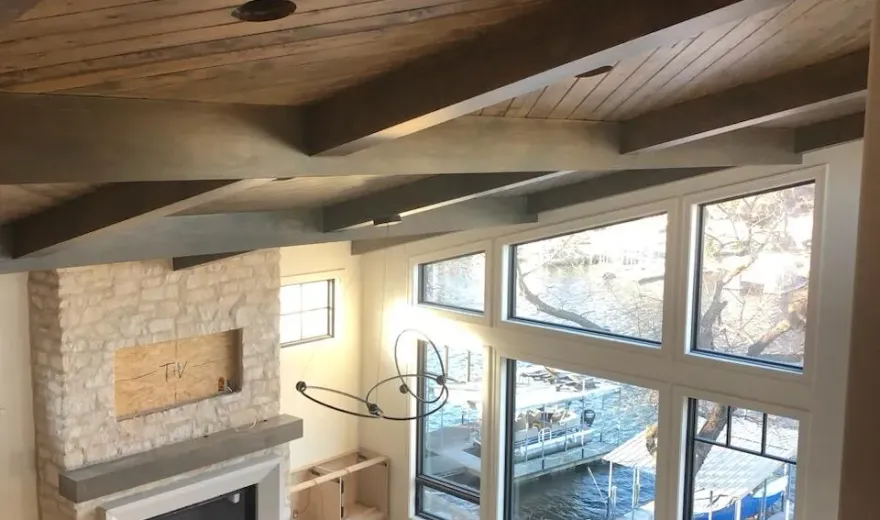
Finished room with a vaulted wood-beam ceiling and lake-view windows for a home golf simulator
Golf simulator enclosure framed and wired with an LED-lit screen surround during installation
Framing to the ceiling we've got
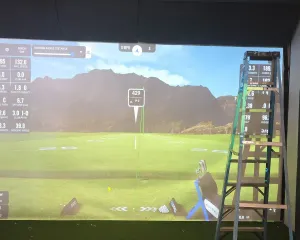
Installer squaring and tensioning the impact screen with a ladder in a golf simulator bay
Climate and clearance handled
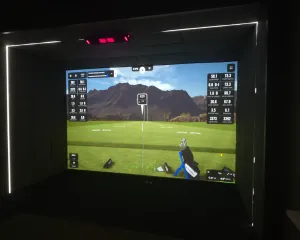
Finished and calibrated golf simulator bay with LED lighting and an overhead launch monitor
Finished and calibrated

Basement Buildout

Thirty years of finished basements before we ever put a simulator in one.

Basements are where a construction background actually earns its keep. The ceiling is never quite where you want it, the ductwork is never quite out of the way, and the moisture is always there whether you see it or not. We've been framing, finishing, and solving basement problems in Kansas City homes since 1995 — so working a screen around a soffit or planning for clearance under a beam isn't a surprise to us, it's the job. We self-perform the construction craft and manage the trusted specialty trades the rest takes, with one team accountable for the whole thing.

Here's something most homeowners don't expect: your basement, not your windows and doors upstairs, is where most of your home's indoor humidity lives — concrete is a porous material and it holds water. Making a basement comfortable year-round is something we handle as part of the build, and it's exactly the kind of detail an equipment installer skips. We build across the Kansas City metro , Columbia, and the Lake of the Ozarks, and the showroom is right here in south KC.

Basement builds assume we're working within your existing basement. If you want the entire basement remodeled into a finished living space with the simulator as one part of it, that's the bigger scope — custom design + build — and we'll tell you honestly which one your project really is.

Investment

Honest ranges, not a quote.

The real number comes after a site visit, because in a basement the ceiling, the moisture situation, and the layout drive the cost. Most basement builds land in one of these three. ⚠ (confirm ranges)

$15k–$25k

Equipment Install

A basement that's already finished, dry, and tall enough; we're installing and calibrating equipment with little or no construction. The simplest version.

Most common

$25k–$45k

Install + Basement Finishing

The space needs some work — finishing, climate handling, light electrical, working around ducts or beams — alongside a full install. No major structural change. This is where most basement builds land.

$45k+

Full Basement Buildout

Higher-end equipment plus the construction to make a raw or problem basement right. Note: a true ceiling dig-out (dropping the foundation for more height) is an extreme, separate cost and a much longer timeline — we'll lay out honestly whether it's worth it for your goal before you ever consider it.

A basement ties the monitor to the ceiling: less height changes which setup makes sense, so we pick the room and the equipment as one decision. Pricing opens around $4k for a solid choice and tops out past $40k, with a Mevo+ near $1k before goal-based software — and the difference between them is mostly marketing budget, not measurement accuracy. We sort out what fits your space in the launch monitor comparison , and Kansas City financing is there if you want to spread it out.

Know your basement and ready to talk numbers?

Before You Commit

Stand in a finished bay and judge the ceiling for yourself.

The thing you can't tell from a spec sheet is how much room a swing actually needs — and in a basement, that's the whole question. Come to the showroom, stand in a finished bay, and see for yourself how clearance, screen, and lighting come together. Bring your basement's ceiling height in your head; we'll tell you honestly what it'll allow.

  • See how much real clearance a full swing takes, so you can picture it against your ceiling
  • Hit balls on the setups that suit a basement ceiling, so you see what works before you commit
  • Look at how a finished room handles light and feel — the things a basement has to get right

All Seasons Indoor Golf Club, south Kansas City — open to the public, no appointment. Visit the showroom .

Drop By the Showroom
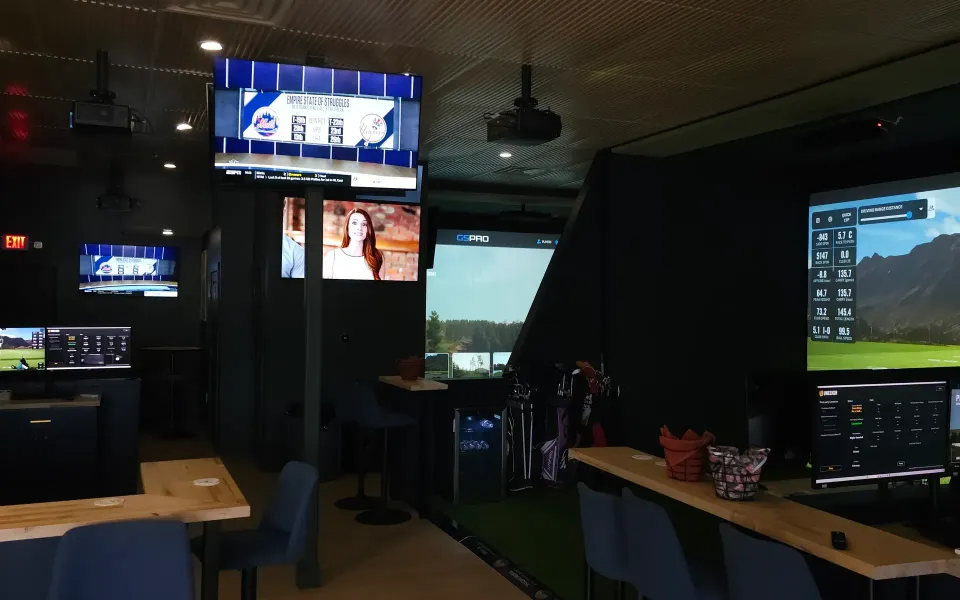
Finished multi-bay golf simulator lounge with screens, TVs, and bar seating

FAQ

Basement build questions.

01

What ceiling height do I need for a basement golf simulator?

+

Realistically, 10 feet lets the space work well for nearly any golfer and any club. Nine-foot-six can work for an average swing, but a driver gets risky — that's when a friend's big swing leaves you patching drywall. We assess your exact height honestly before anything's ordered.

If your basement is lower than that, you have options — equipment and layout choices that suit shorter clearance, or, at the extreme, digging out the foundation for more height. We'll walk through what's actually worth it for your goal.

02

My basement ceiling is low. Can you still build a simulator?

+

Often, yes — it depends how low. Below about nine-foot-six we get careful, and we'll be honest if your height limits the experience. There are equipment and layout choices that work in tighter spaces, and dropping the foundation is a last-resort option when the goal justifies the cost.

The worst outcome is spending the money and not being able to swing a driver. A site visit tells us — and you — exactly what your space allows before you commit.

03

What's included in a basement golf simulator installation?

+

The full job: assessing your ceiling and space, helping you choose equipment, handling the basement-specific construction (climate, moisture, working around ducts and beams), and installing and calibrating everything. It's the same scope as any home installation, with the basement realities handled as part of it.

If the whole basement needs to become a finished living space, that's a bigger scope — custom design and build — and we'll tell you which one you're in.

04

Do basements have moisture problems for a simulator?

+

They can. Your basement, not the windows and doors upstairs, is where most of your home's indoor humidity lives, because concrete is porous and holds water. We handle climate and moisture as part of the build, so the screen and electronics hold up and the room stays comfortable year-round.

This is exactly the kind of detail an equipment-only installer skips — and it's why a basement build is a construction job, not just an install.

05

Do you do the construction yourselves, or use subcontractors?

+

Both, honestly. We self-perform what we specialize in — framing, finish carpentry, and the basement-specific work like working around ducts and beams and handling moisture — and bring in trusted licensed trades for electrical and HVAC. Either way, one team manages and stands behind the whole project.

That's the real difference from a simulator dealer, who hands the entire build to whoever's available and disappears. We're the construction expertise, and we run it end to end.

Ready to build the bay in your basement?

Tell us your ceiling height and your goal — that's where every honest basement conversation starts — or come stand in a finished bay first. Either way, it's a conversation, not a contract.

All services